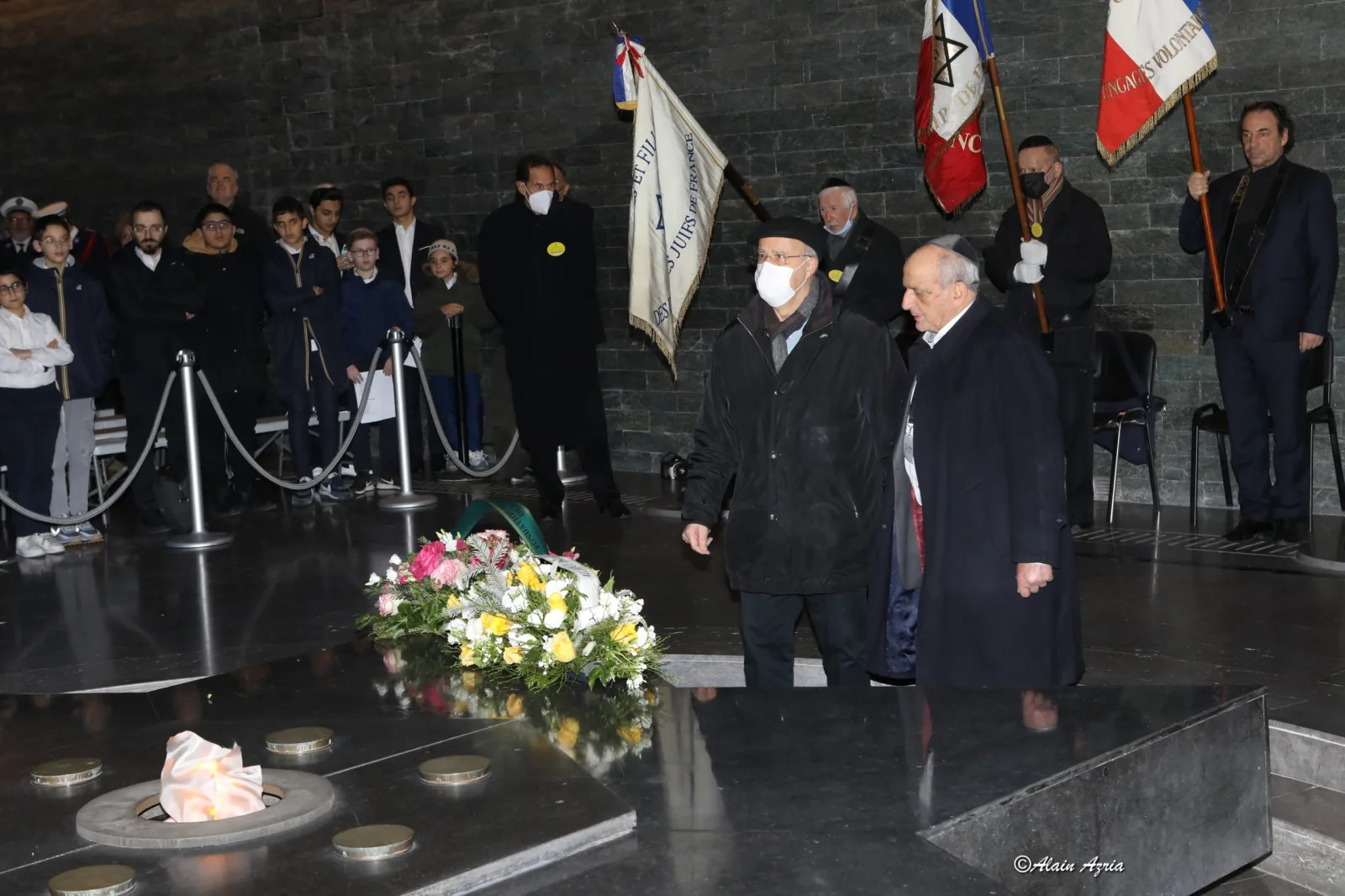
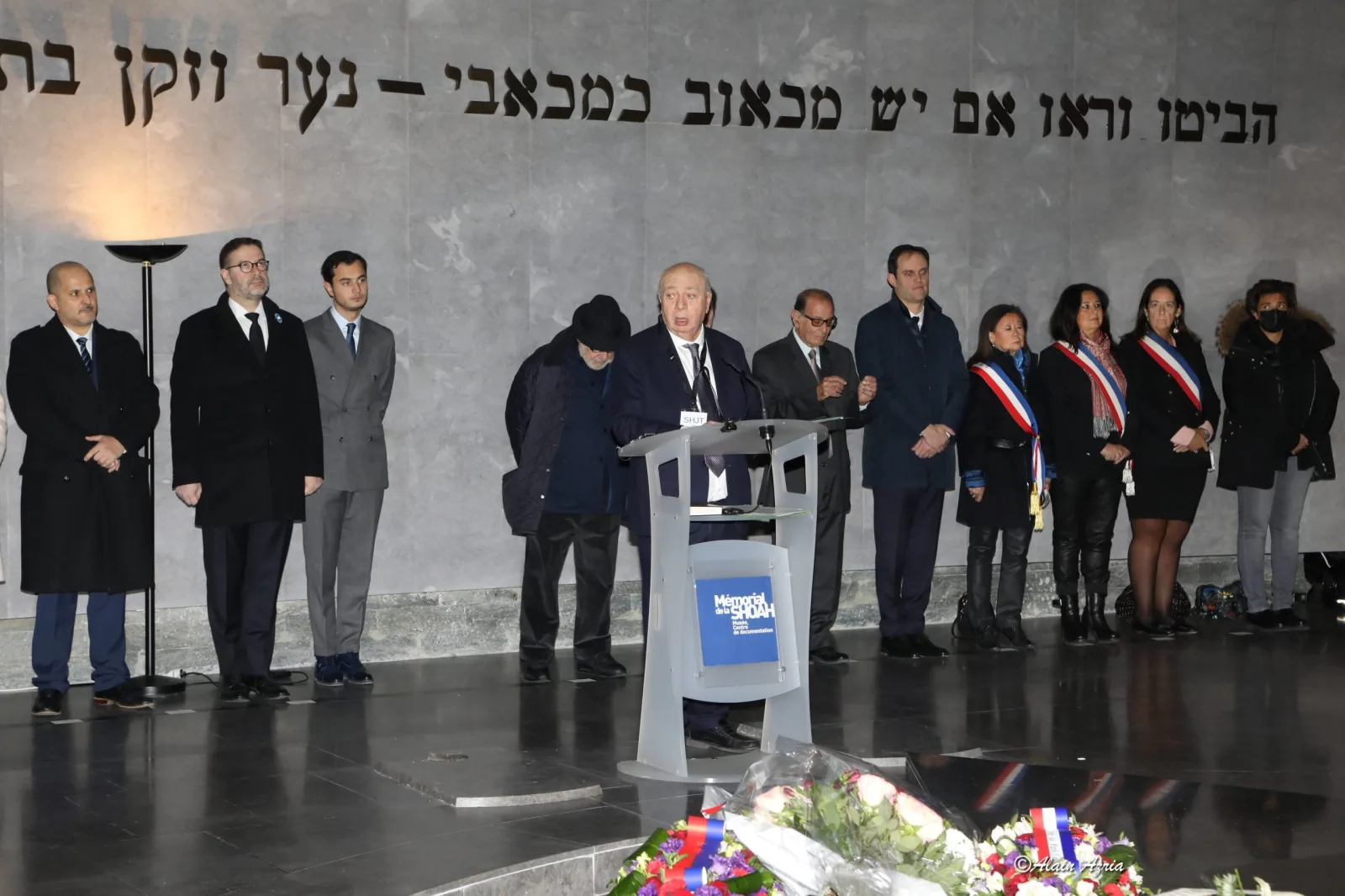
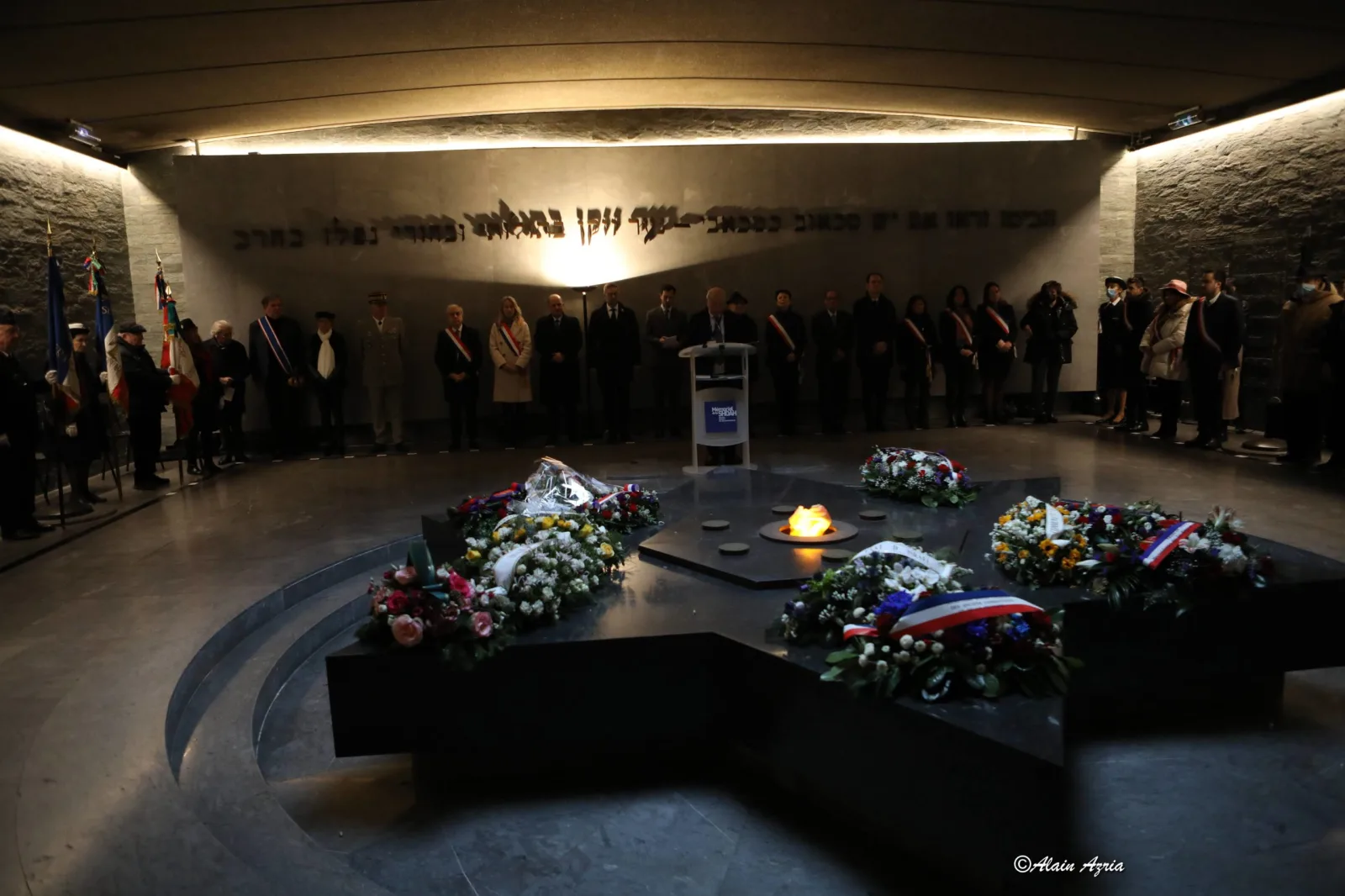
Emotion and historical reminders marked the commemoration of the 80th anniversary of the Round-up of the Jews of Tunis in Paris on Sunday 11 December
Published on December 14, 2022
The Society for the History of the Jews of Tunisia was keen to mark the commemoration of the round-up of the Jews of Tunis by the SS on 9 December 1942 by combining memory and history, a ceremony of remembrance and debates between historians, because this event, little known to the general public, illustrates Nazi Germany’s determination to erase any Jewish presence not only in Europe but in every territory it occupied during the Second World War.
A twofold event: in the morning in the crypt of the Mémorial de la Shoah in Paris, and in the afternoon the screening of a film and a lecture-debate at the MAHJ.
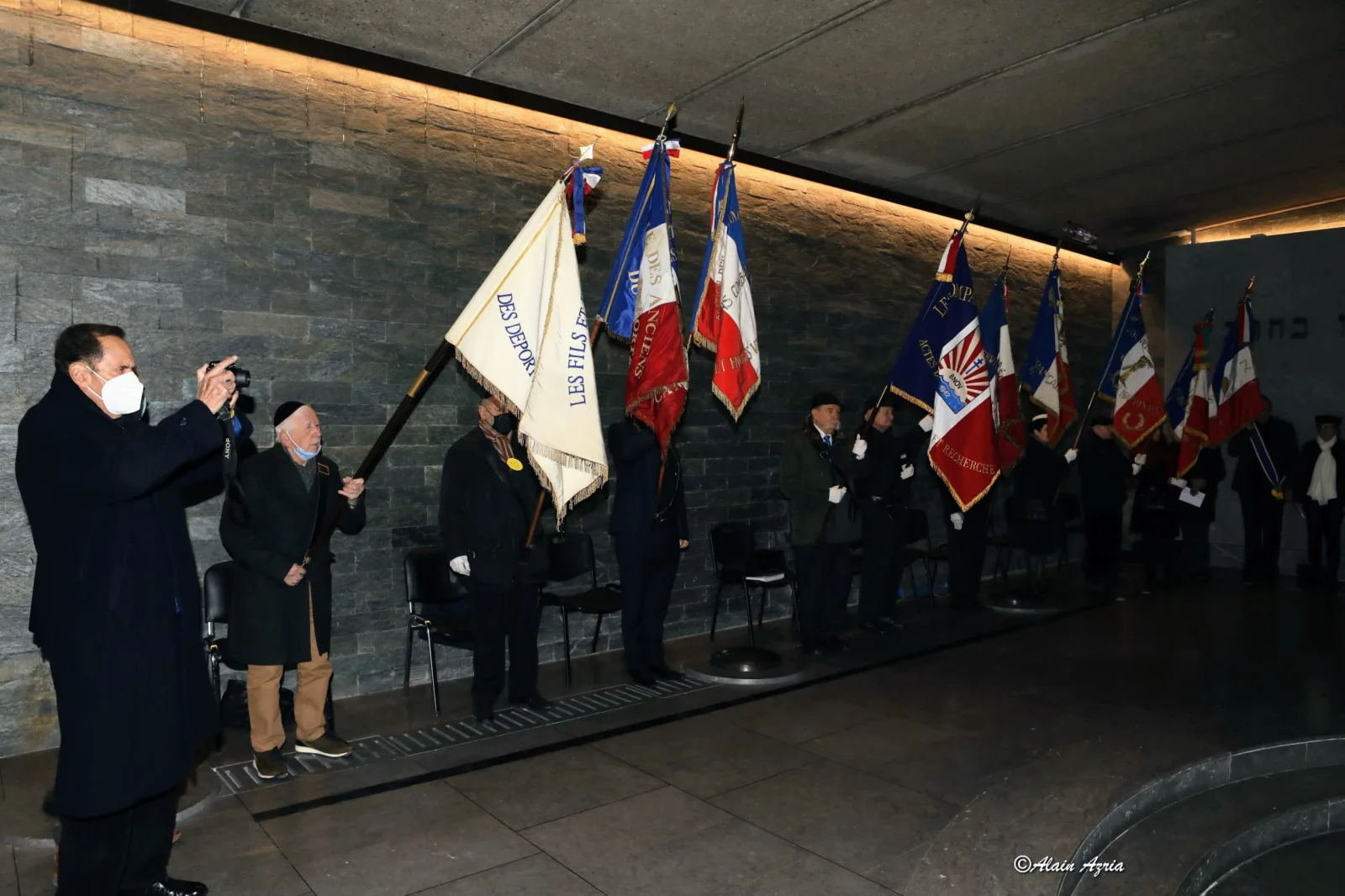
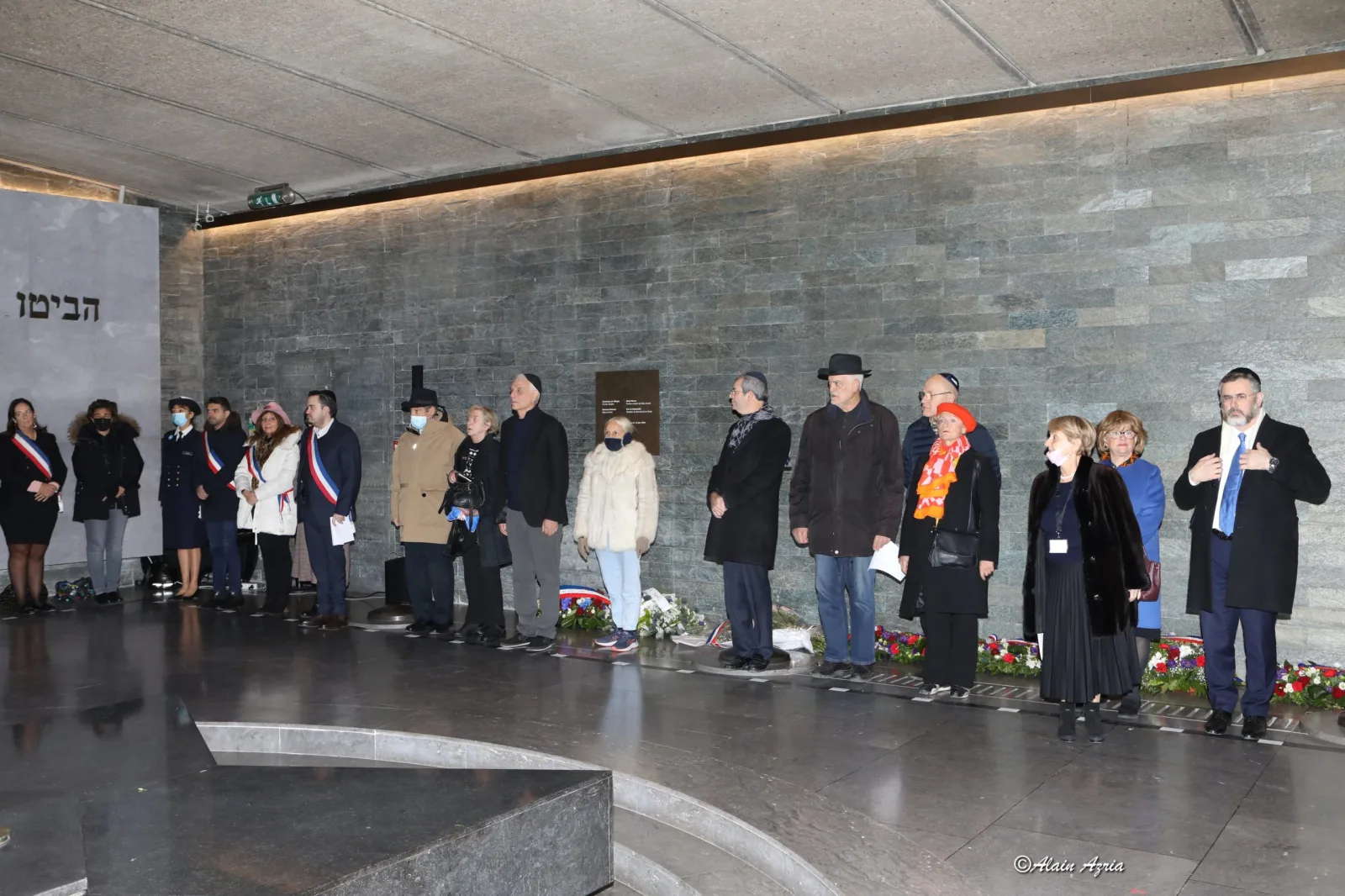
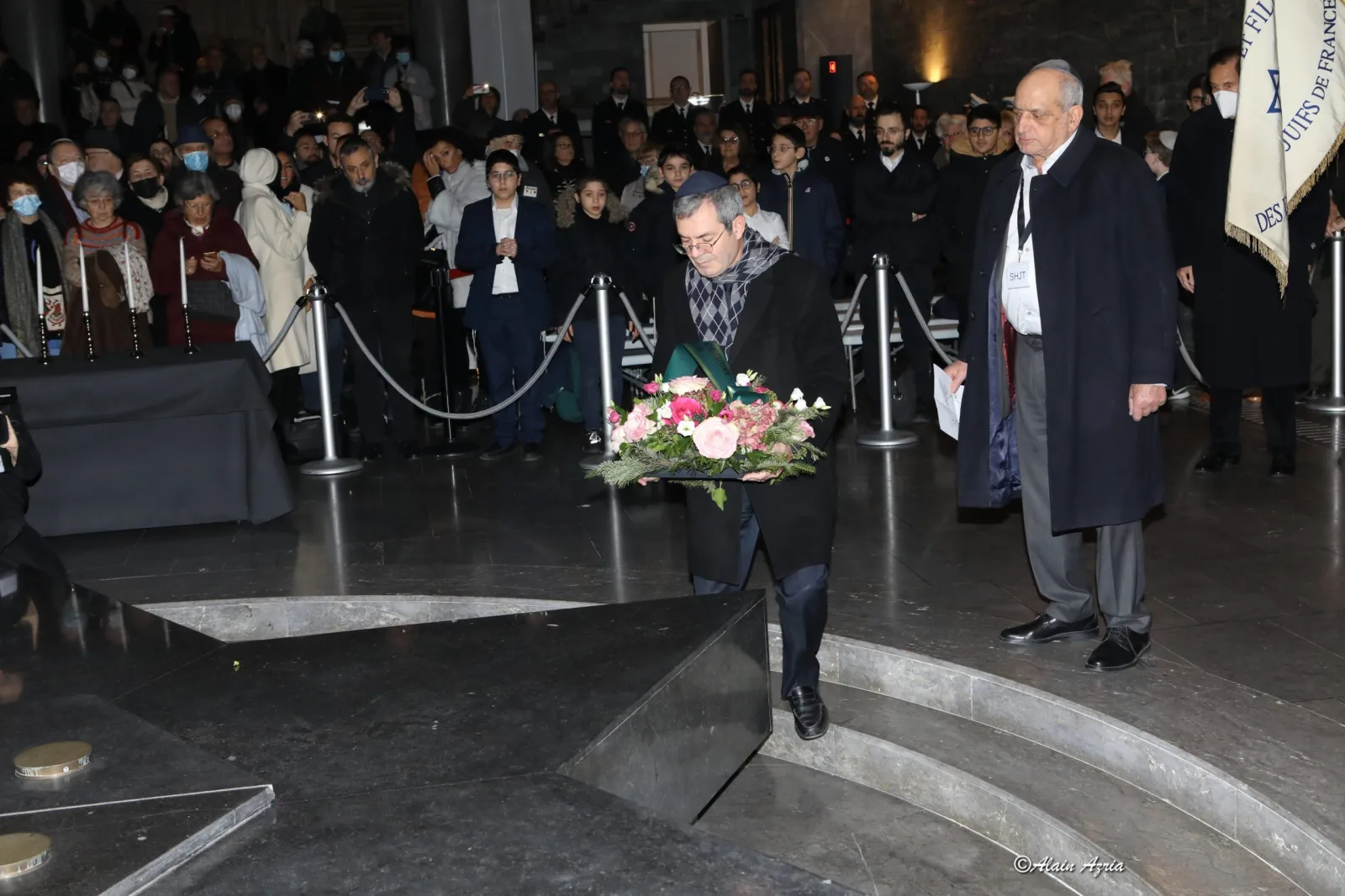
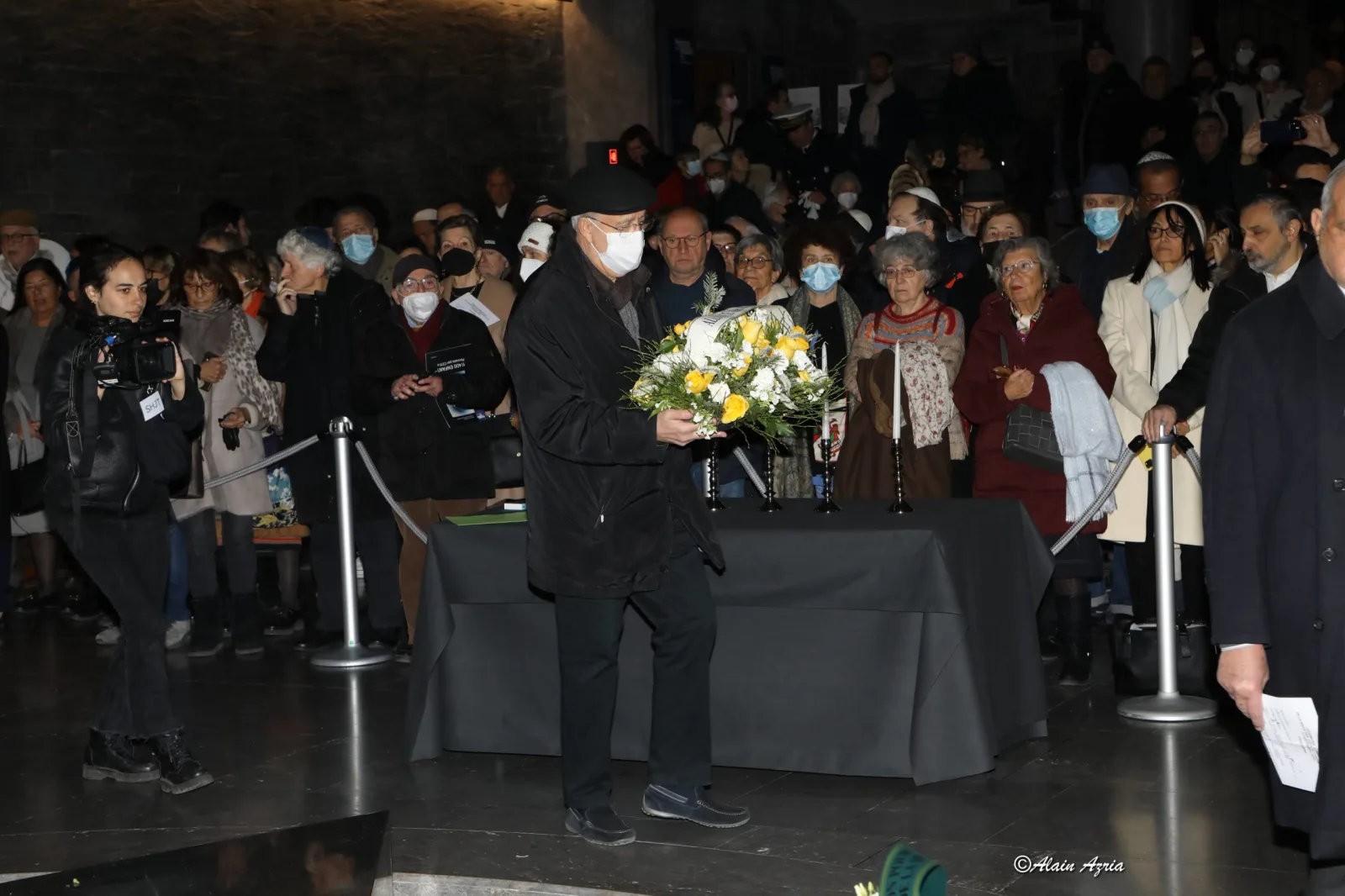
An exceptional and moving morning in the presence of a very large audience and of civilian, military and religious dignitaries. The president of the SHJT, Mr Claude Nataf, recalled what this round-up, carried out on the orders of SS Colonel Walter Rauff, the inventor of the gas vans (mobile gas chambers used on the Eastern Front), had meant for the Jews of Tunis, as well as the other abuses and atrocities committed by the Nazi soldiery throughout their occupation of Tunisia: forced labour in camps, ransoms, murders, rapes and finally deportations by air in April 1943, shortly before the liberation of the territory. A poignant reading was given of the testimony of one of the victims of that terrible day of 9 December 1942 and of the forced labour imposed on him, as on the other detainees. The Chief Rabbi of Paris, Mr Michel Gugenheim, presided over the religious part of the event and, in an address of great spirituality, showed that the failure of Nazism lies in the adherence of the greatest number to the values of goodness, love and fraternity that emerge from the spiritual tradition of the Jewish people.
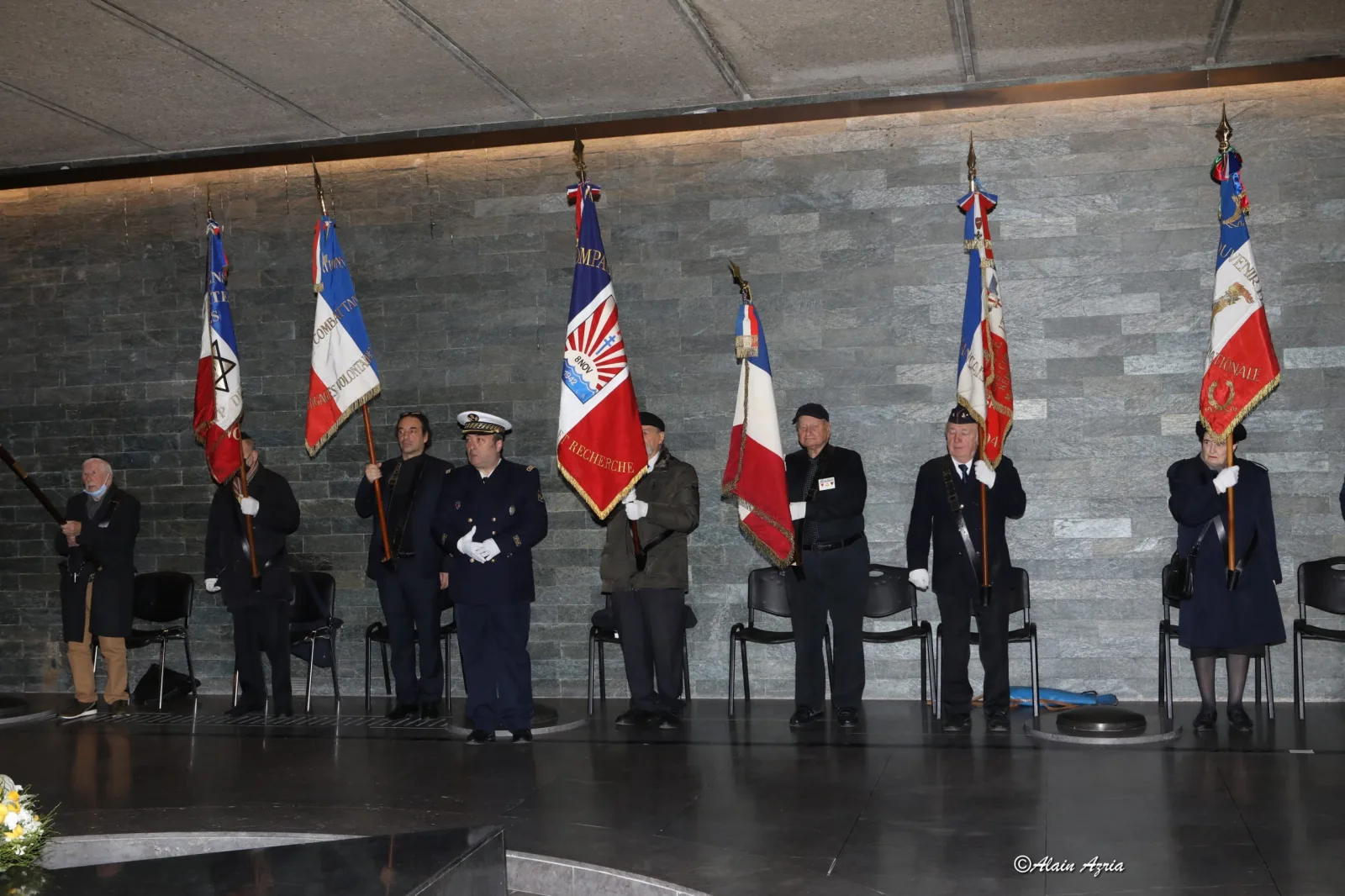
The memory of the Jews of Tunisia who died for France on the field of honour was also recalled and united, in the customary prayers recited by the cantor Mikaël Darmon, with that of the victims of Nazism who died because they were Jews. The French Army Choir, under the direction of Commandant Emile Fleury, provided the musical part: the Chant des partisans, a Requiem in Hebrew and, to close, the Marseillaise. A dozen children from the synagogue of the Jews of Djerba in Paris, presided over by Mr Bension Houri, attended the ceremony. Among the dignitaries were Mr Thierry Laurent, representing the Secretary of State for Veterans and Remembrance; Mr Roger Karoutchi, Vice-President of the Senate; Senator Sueur, president of the France-Tunisia friendship group in the Senate; Mr Farés Saeb, minister-counsellor at the Embassy of Israel; Mrs Constance Legrip, member of parliament for Hauts-de-Seine, and Mrs Jeanne d’Hauteserre, Mayor of the 8th arrondissement, and many elected officials from Paris and the neighbouring departments; General Chasboeuf, deputy to the military governor of Paris; Joël Mergui and Yonathan Arfi, respectively presidents of the Consistoire de Paris and of the CRIF; Claude Bochurberg, representing Les Fils et Filles des déportés juifs de France; Serge Moati, son of one of those deported by air in April 1943; and many representatives of veterans’, former deportees’ and remembrance associations.
Below you will find the complete audio recording of this event in mp3 format (credits: Morris Azan)
The afternoon at the MAHJ was devoted to the condition of the Jews of Tunisia during the Vichy period and then, from November 1942, under the occupation of the country by the Axis forces, while a six-month war for control of North Africa was being fought on Tunisian territory.
A round table chaired by Catherine Nicault, Professor emerita at the University of Reims, brought together Claude Nataf, who recalled the historical context and then discussed direct testimonies of the round-up of 9 December 1942; Haïm Sadoun of the Open University of Israel, on recent discoveries in the German archives; and Martino Oppizzi, on the Italian archives. All these new sources make it possible to measure the scale of the baleful fate that the Nazis had in store for the Jewish population of Tunisia, plans thwarted by the Liberation of Tunisia by the Allied forces on 8 May 1943, which thus averted a possible annihilation programmed as elsewhere in Europe.
This debate between historians was preceded by the screening of an excellent historical film, « Les Juifs d’Afrique du Nord pendant la Seconde Guerre mondiale », by Claude Santiago and Antoine Casubolo, in the Mémoire de la Shoah collection, based on an idea by Serge Klarsfeld. This film shows great historical rigour, with excellent footage taken from the newsreels of the time, military archives and several other sources, interspersed with testimonies, the whole commented on step by step by historians. It recalls precisely the situation of the Jews not only in Tunisia but throughout North Africa, with a particular context for each of the three countries owing to the Allied landings in Algeria and Morocco while the Axis established itself in Tunisia. It sheds light on the role of the Jews of Algeria in the Allied landings, the assassination of Admiral Darlan, General Giraud’s reluctance to let the Jews recover their full and complete citizenship, the disagreements between Generals Giraud and de Gaulle, and the decisive action of the latter for the repeal of the Vichy Statut des Juifs. A film to be recommended to the younger generations, who are often unaware of this part of the history of the Second World War. A day, 10 December 2022, placed under the sign of remembrance and of recalling a page of history that is particularly important for shedding light on the antisemitic action of Vichy and the Nazis.
Image
Video
Enregistrement audio
Emotion and historical reminders marked the commemoration in Paris on Sunday 11 December of the 80th anniversary of the round-up of the Jews of Tunis
Download the MP3Photos