Ceremony of 8 December 2024 in memory of the round-up of the Jews of Tunisia
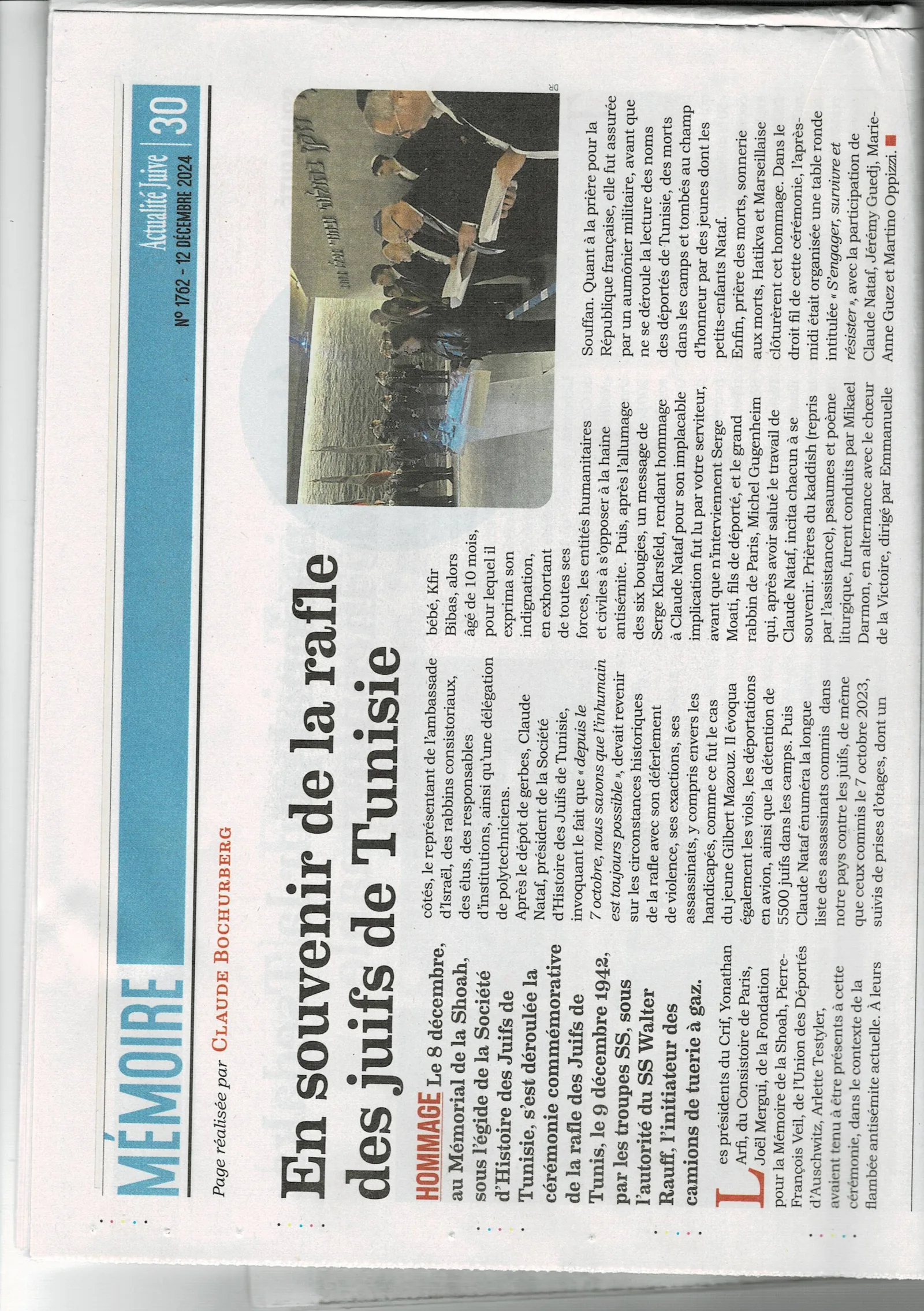
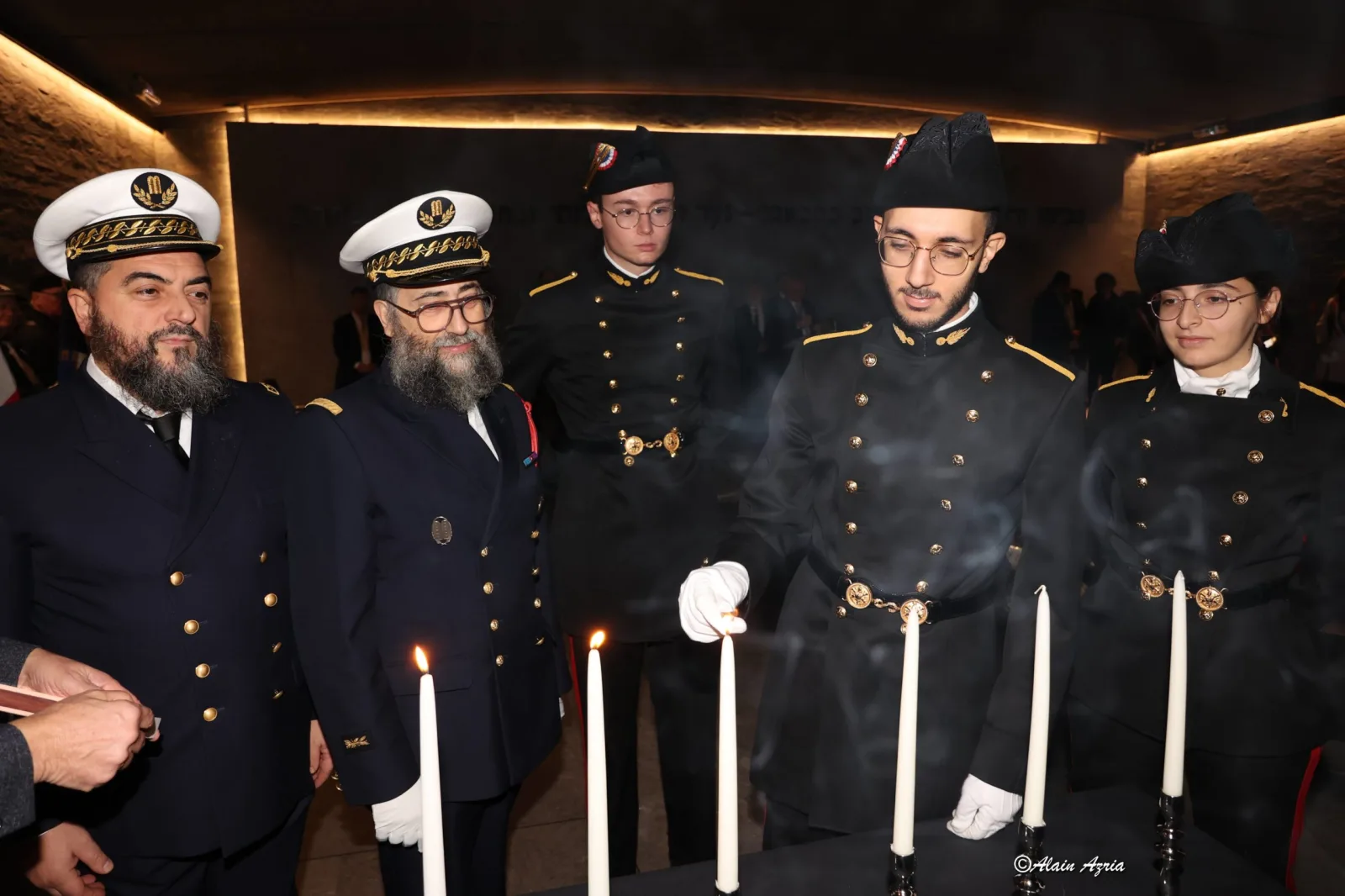
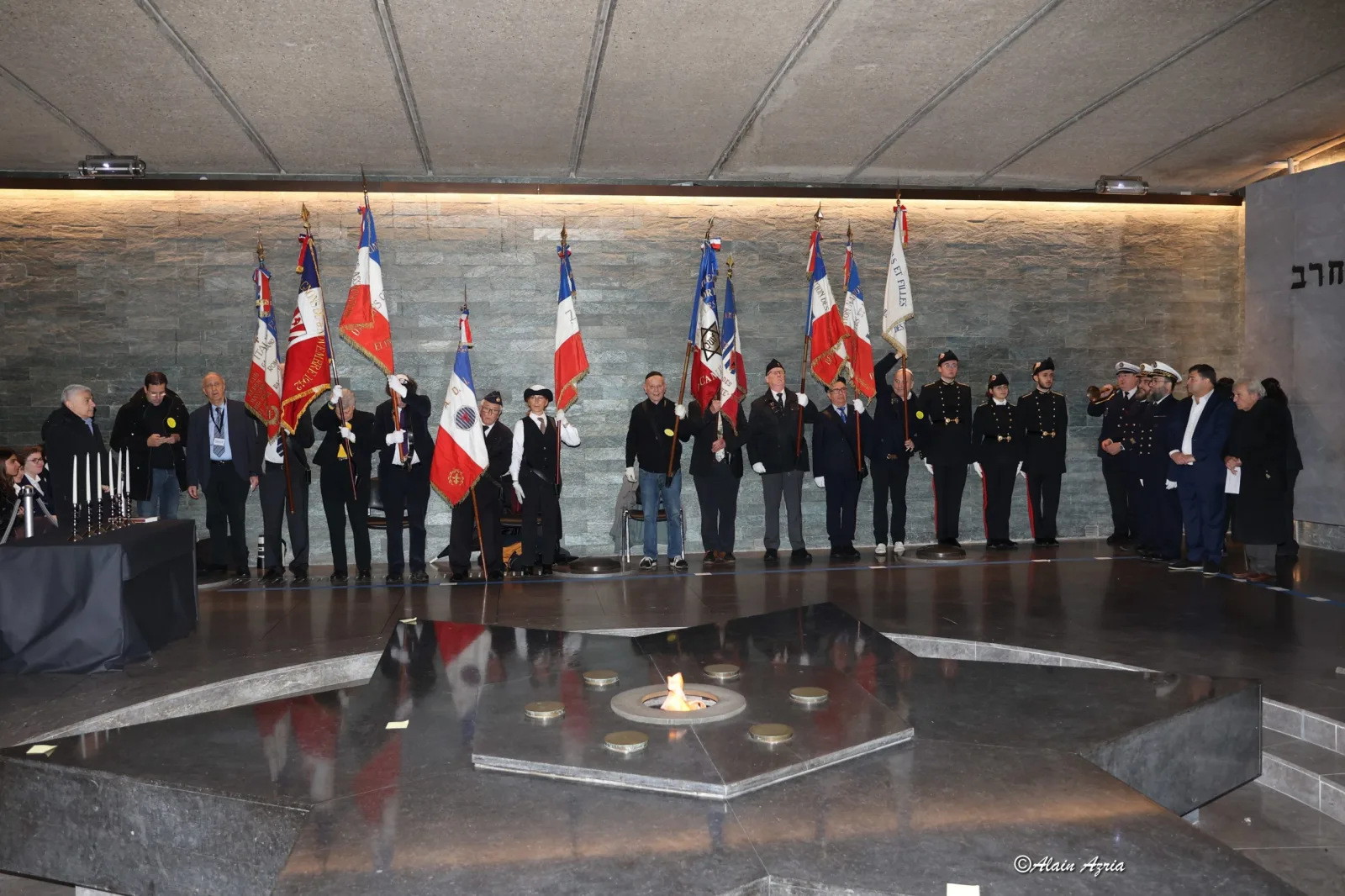
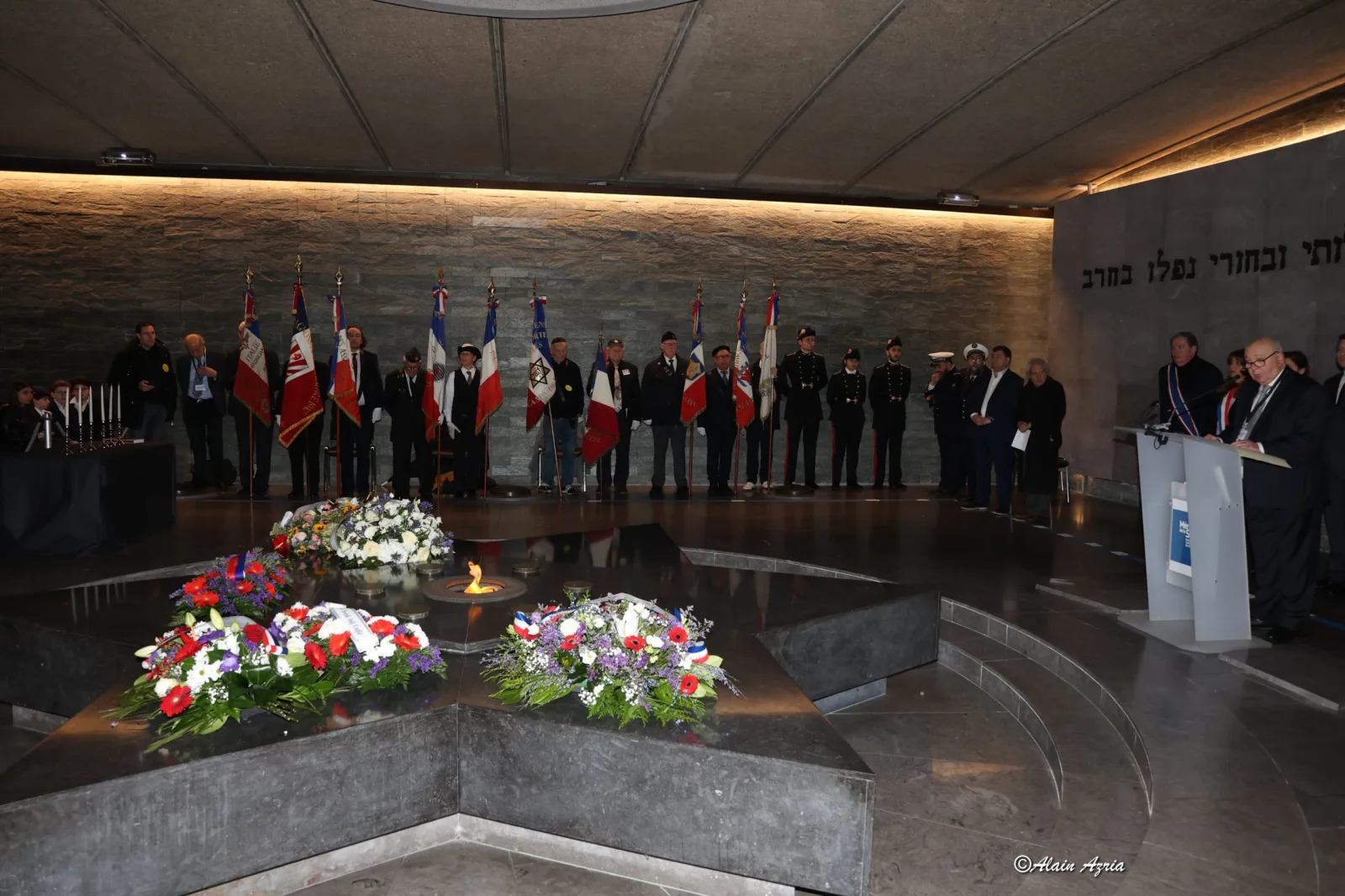
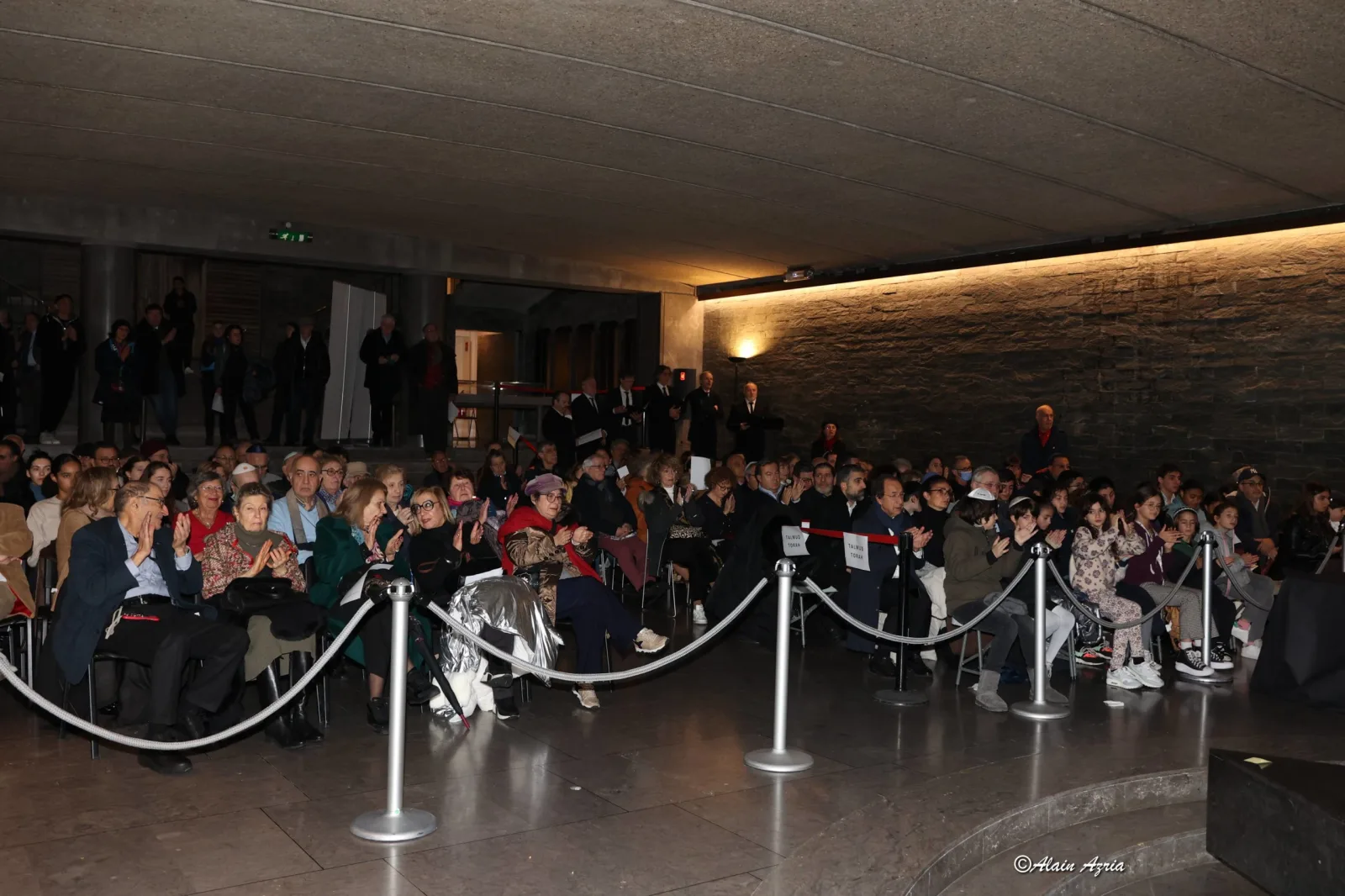
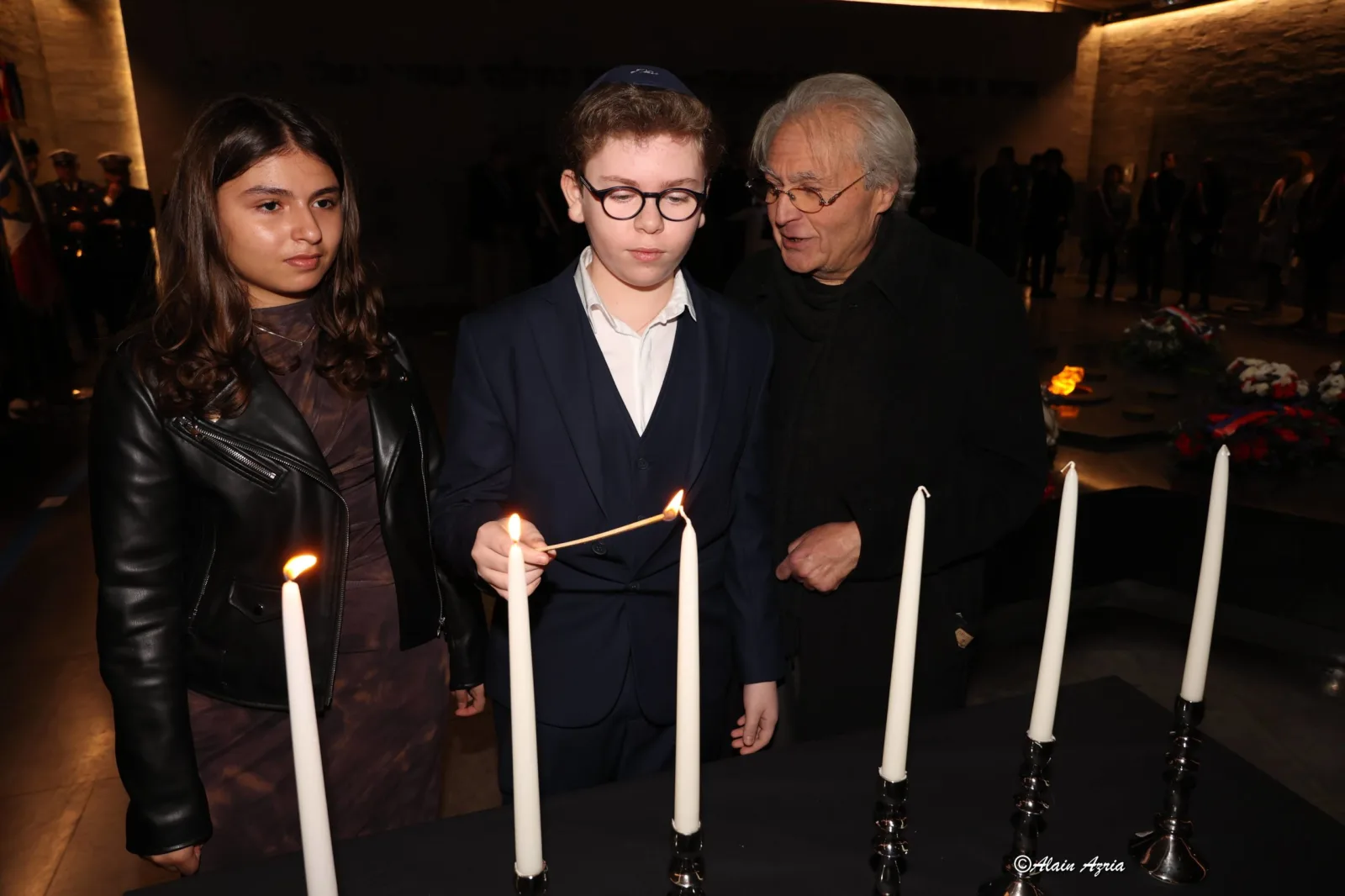
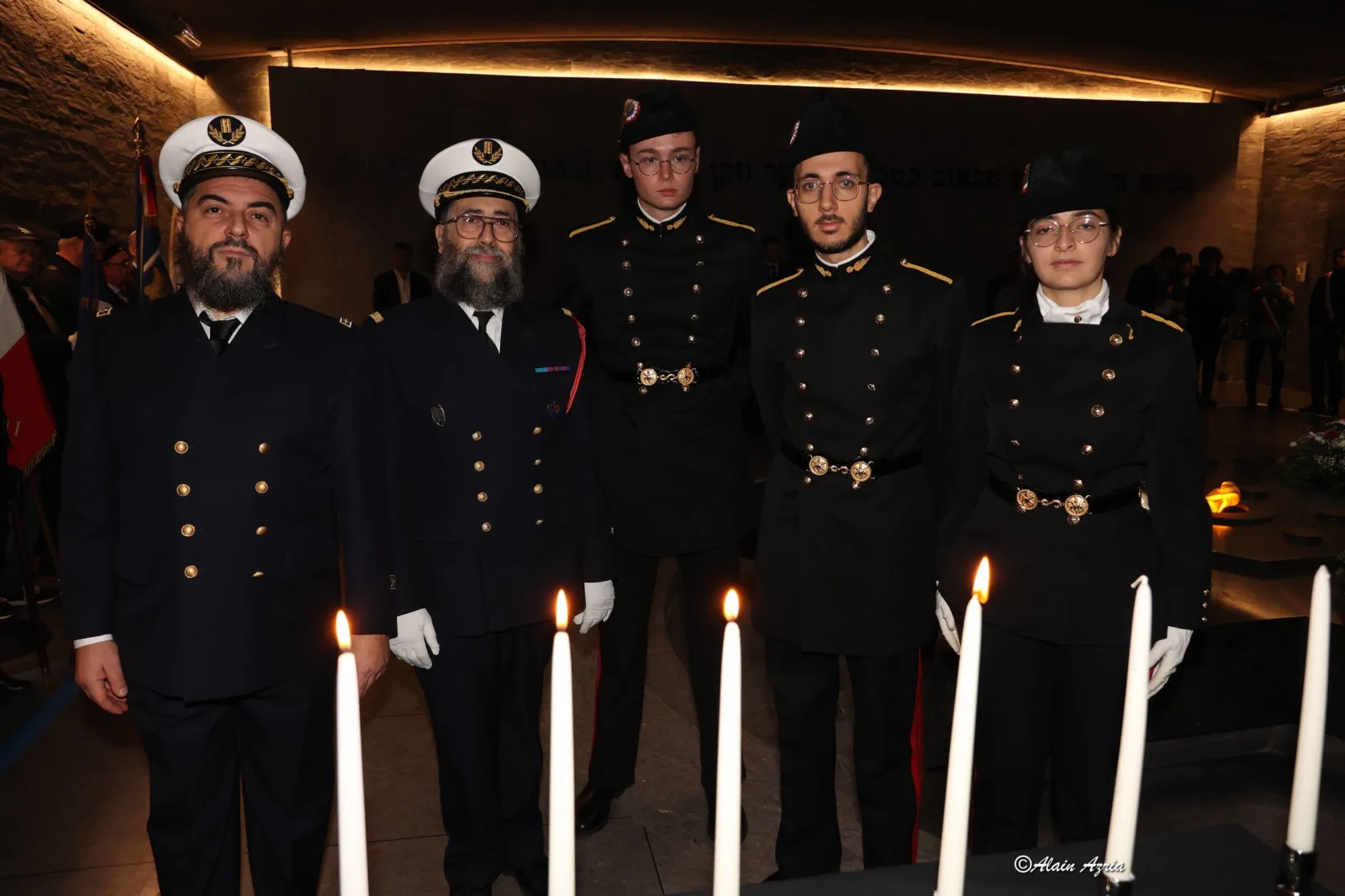
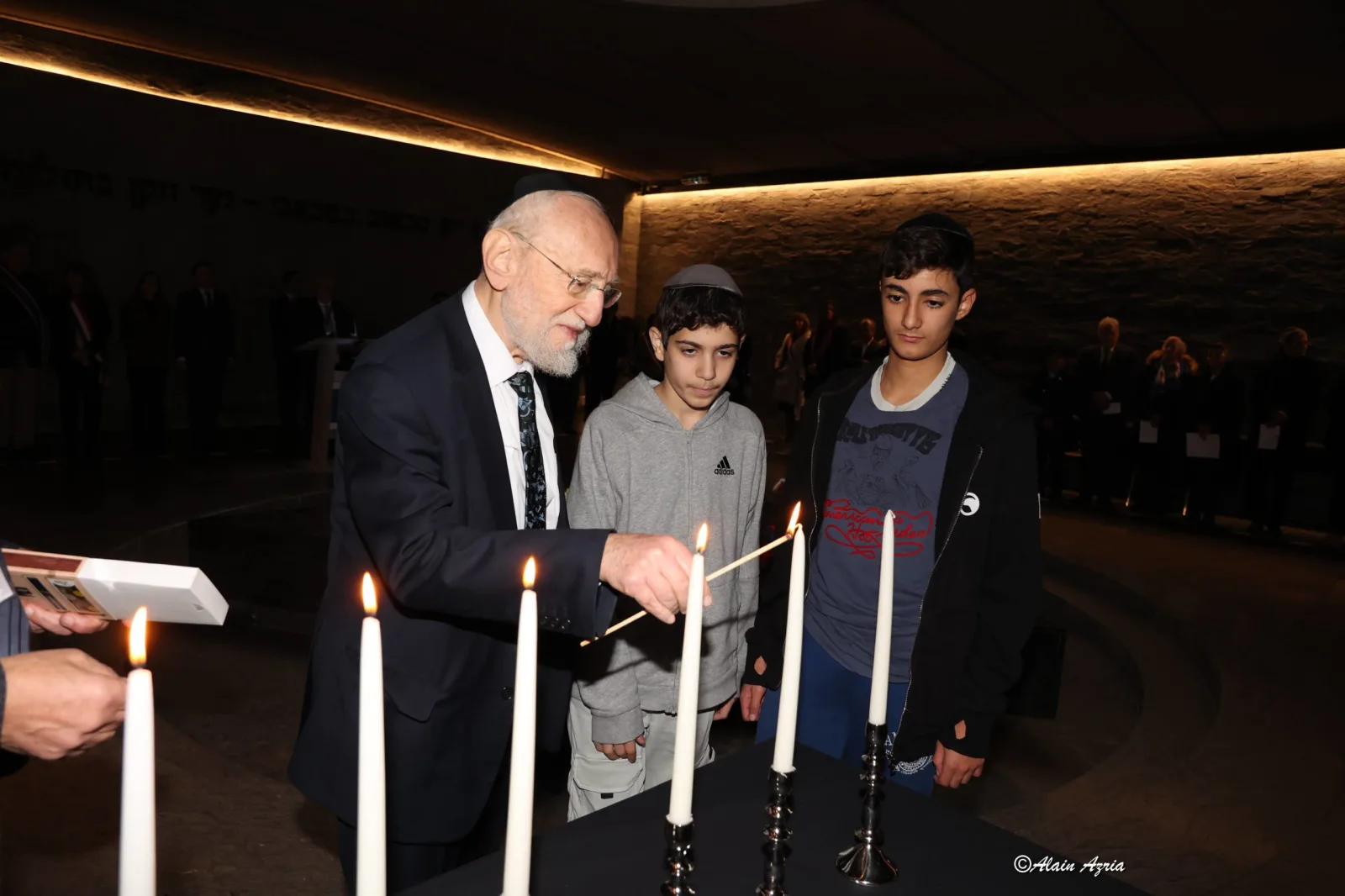
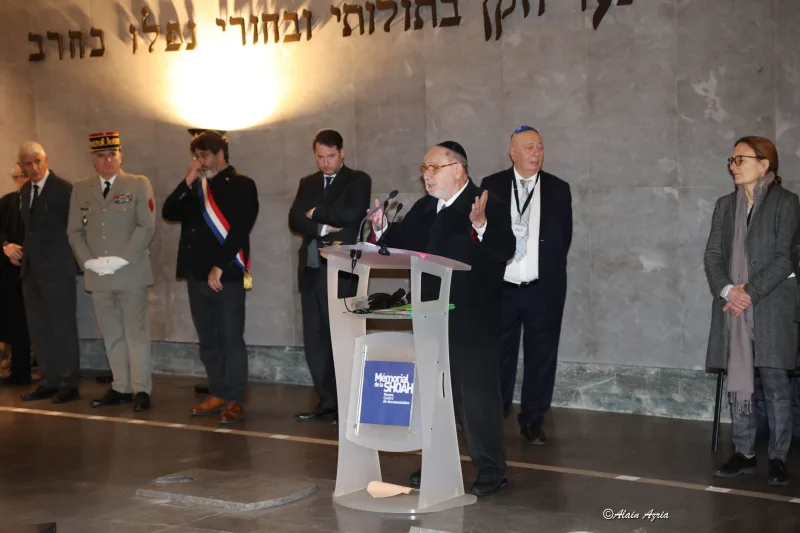
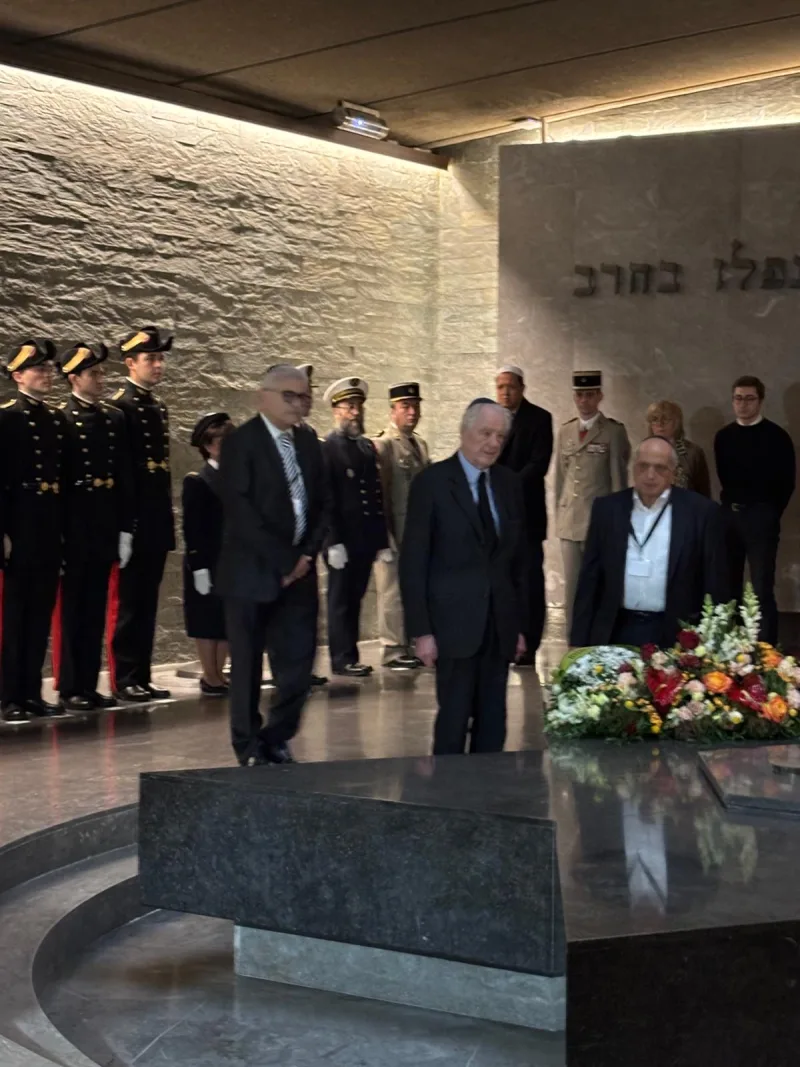
On Sunday 8 December 2024, the commemorative ceremony for the round-up of the Jews of Tunisia took place. Below you will find the speech delivered by the President of the SHJT, Claude Nataf, the article published by Claude Bochurberg in Actu J, as well as a selection of photographs taken during the ceremony.
Below you will find the complete audio recording of this event in mp3 format (credits: Morris Azan)
SPEECH DELIVERED ON 8 DECEMBER 2024 AT THE CEREMONY ORGANISED BY THE SOCIETY FOR THE HISTORY OF THE JEWS OF TUNISIA IN MEMORY OF THE JEWS OF TUNISIA WHO WERE VICTIMS OF THE NAZIS
Chief Rabbi of Paris, Rabbis,
Representative of the Minister Delegate for the Armed Forces and Veterans,
Representative of the Embassy of Israel,
Member of Parliament,
Mayor of the 8th arrondissement, elected representatives of Paris, Levallois, Neuilly-sur-Seine, Courbevoie and Sarcelles,
Regional Councillor representing Mrs Valérie Pécresse,
President of the Consistoire de Paris, President of the CRIF, President of the Fondation pour la
Mémoire de la Shoah, presidents and representatives of the major Jewish organisations,
Mr Claude Bochurberg, representing Serge Klarsfeld, and presidents and representatives of the associations of former deportees, veterans and remembrance,
Flag bearers,
Dear children of the Talmud Torahs of the Synagogue of the Jews of Djerba, the Buffault Synagogue and the Centre français du judaïsme tunisien, you who are the transmission of tomorrow,
Ladies and Gentlemen,
It is difficult to speak in this crypt, whose floor holds ashes brought back from the extermination camps and whose cabinets contain the remains of sacred scrolls from the communities of Eastern Europe, all decimated and vanished. Here everything calls for silence, remembrance, contemplation and prayer. Music, because it knows how to express the language of pain, would perhaps be more fitting here, where eloquence could not find the shadow of a purpose.
Here one closes one's eyes and hears the cries of distress, the shouted orders, the voices of those 6 million men, women and children who, because they were Jews, crossed the threshold from humanity into barbarism.
Words then seem empty of meaning, derisory. And yet I stand before this flame of the ossuary, which flickers and shines as a challenge to the night. This light recalls life, life that is reborn, that returns; and for the living of today, for the children who are here and who will have to pass it on, I have the duty to tell, to tell in order to pay tribute to the victims, to tell so that the temptation of the inhuman is not renewed. Since 7 October 2023 we know that the inhuman is still possible, and we have seen through images that modern means make it possible to broadcast the most monstrous, the most shameful acts of barbarity since the Shoah; we have seen women disembowelled, babies with their throats cut, living beings burned alive, burned as at Auschwitz.
So I must tell…
On 8 November 1942, Anglo-American troops landed in Algeria and Morocco, the prelude to the liberation of Europe from the Nazi yoke.
Hitler immediately understood that, to prevent Rommel's troops fighting in Libya, pursued by Montgomery's 8th Army and de Gaulle's Free French Forces, from being caught in a pincer movement, he had to occupy Tunisia and send his troops towards Algeria in order to drive the Allies back into the sea and deprive them of these bases for launching operations towards Europe.
On 9 November 1942, German and Italian troops set foot in Tunisia. This gentle country with its brilliant blue sky became the theatre of a six-month battle, one of the deadliest battles of the war.
Although the battle should have been their sole concern, there as everywhere they went, as in Paris and Warsaw, as in Rome and Salonica, as in Budapest and on the small island of Rhodes, the Germans turned on the Jewish population, which since November 1940 had already been the victim of the discriminatory laws of the Vichy government.
It was SS Colonel Rauff who was responsible for the anti-Jewish action, this valiant man no doubt finding it less dangerous to attack defenceless populations than to go and fight other soldiers at the front like a soldier. A friend of Heydrich and deputy of Eichmann, Rauff had organised the industrial killing of the Jews of Europe. Inventor of the mobile gas vans in which thousands of Polish Jews perished, he then took part in the design of the gas chambers. At the beginning of 1942, as the German Army was preparing to invade Egypt, Rauff was seconded to Rommel's general staff. His mission, in the much-hoped-for event of victory over the British, was "to deal with" the Jewish question in Egypt and Palestine. But the British offensive forced Rommel to retreat to Libya and from there to Tunisia. Rauff was thus unable to carry out his mission, but since the course of the war had placed him in Tunisia, and since there were Jews in Tunisia, Rauff, as a disciplined soldier, would try to carry out his mission there and "deal with" the Jewish population.
He had only a dozen or so SS men at his disposal, and the Wehrmacht generals, confronted with the difficulties of the front, were hardly inclined to place their soldiers at his disposal for a mission they did not understand or whose military usefulness they could not see. Rauff then tried to incite the Muslim population to a pogrom. To this end he handed out large quantities of banknotes, but to no avail, for the leaders of the Muslim population, once informed, succeeded in preventing this tragedy, which was limited to the looting of warehouses and goods.
Furious, Rauff then decided to confine the Jews aged 18 to 40 in labour camps scattered across Tunisian territory, on the pretext of work on behalf of the Axis armies, but in fact – and we found proof of this only a few years ago – in order to shoot them on the day when, as he hoped, the German troops would break through the front and advance on Algeria.
On the morning of 9 December, Rauff arrived with his SS men at the Great Synagogue on the Avenue de Paris. The SS fired shots, beat people at prayer, vandalised the Holy Place by desecrating the Torah scrolls, destroyed books and sacred objects, wrecked the furniture and arrested all the men present, including rabbis, officiants, the elderly and the infirm. Throughout the neighbourhood, informed of people's identities by young Arabs, German soldiers arrested every Jew who passed by, and the same happened around the Alliance Israélite school on Rue Malta-Srira. This was the Round-up.
Throughout the day of 9 December, several thousand Jews were arrested and marched on foot, under the guard of German soldiers, to labour camps, most of them along the front line. The first victim was a 19-year-old young man, Gilbert Mazouz, who, wearing an orthopaedic brace, stumbled and fell exhausted at the end of a 50-kilometre march, despite all the efforts of his companions in misfortune. An SS man coldly killed him with a rifle shot. Two days later, in Ariana, it was the turn of the rabbinical student Victor Nataf to be shot, because for the Nazis the population had to be impressed into obeying German orders by shooting a rabbi.
From 9 December 1942 until the liberation of Tunis on 8 May 1943, while one hundred notables were imprisoned as hostages destined for certain death, 5,000 young Jews of Tunis were sent to camps and used as labour in conditions contrary to the law of nations and to all the laws of humanity. They were employed in the most exposed places, on airfields and battlefields, under the whips of the German guards, constant victims of abuse, extortion and sometimes, alas, murder.
In Nabeul, Kairouan, Sfax and Sousse, the Germans acted in the same way, with, in the latter city, the sorry assistance of the French SOL. And everywhere there were requisitions of property, looting, collective fines of more than 80 million francs of the time, and the rape of women.
And in April 1943, one month before the liberation of Tunis, a first contingent of deportees left by plane for Italy and from there for the camps of ORANIENBURG, MAUTHAUSEN and AUSCHWITZ. Fortunately, less than a month later, on 8 May 1943, the Axis armies, caught in a pincer between the Allied forces coming from Tripolitania and those coming from Algeria, were forced to capitulate.
This procession of suffering, which brought tears to fathers, mothers, wives and children, appears infinitesimal compared with the suffering of the Jews of Europe. But it is not fitting to distinguish or separate. That would be indecent, for all this suffering stems from one and the same design: to hunt down Jews always and everywhere, of all origins and all nationalities, believers or non-believers, Orthodox or liberal, faithful to the tradition of their ancestors or rejecting it.
In recalling this dramatic period in the history of the Jewish population of Tunisia, I do not forget that it had the good fortune to find the help or comfort of Muslim or Christian friends, among them the Prince of the Husainid dynasty which then reigned over Tunisia, who declared that the Jews were his children, or Monsignor Gounot, Archbishop of Carthage, who warned Catholics against antisemitism and recalled that "Jesus Christ, our divine model, was Jewish".
This ceremony unites the memory of the Jews of Tunisia who died on the Field of Honour with the names of the deportees and of those who died in the labour camps.
Two years ago, at the suggestion of our Society, a young agrégée in history defended at the Sorbonne a thesis on the Jews of Tunisia in the French Army during the two World Wars, which was published a few months ago. It reveals that in 1943, 85% of the French Jews liable for mobilisation had refused to answer the mobilisation order of the Army of Africa commanded by General Giraud and had joined the Free French Forces, because in their eyes these embodied Honour and the Republic, the French Republic in which they believed.
Apart from the French and Tunisian Jews who fought in the campaigns of Africa, Tunisia, Italy, France and Germany, we must also salute the memory of the resistance fighters: those who had the good fortune to return, such as Serge Moati, Lise Hanon, and the courageous Ankri and Maurice Taïeb, who did not hesitate to continue their action while detained in a labour camp; and those who did not return, such as Alfred Rossi, Edouard Dana, Victor Cohen or Max Guedj, a native of Sousse, Companion of the Liberation, cited by General de Gaulle in his Memoirs.
What happened 82 years ago reminds us how vigilant we must remain as the old demons resurface: hatred of the other, rejection of the other, antisemitism, Holocaust denial.
The grief of an Israeli mother weeping for her child killed, dismembered, disembowelled by the hordes of Hamas, and the grief of a Palestinian mother weeping for her child killed in an air strike in Gaza, are equally heartrending, and they revolt the human conscience.
But should we not be revolted first of all by the fate of a 9-month-old baby taken hostage on 7 October, an Israeli baby who has been a hostage since 7 October 2023, for more than a year now, a baby about whom no one knows how he is being kept, fed or cared for, about whom no news is given, and whom everyone seems to find it normal to be a hostage at his age? Allow me to express my astonishment at the silence of the International Committee of the Red Cross or of Amnesty International, which limit their visits and inspections to Israeli prisons. Gentlemen of the International Committee of the Red Cross, you whose predecessors were silent at Auschwitz, are you not ashamed? You are continuing the silence of Auschwitz. Are you not ashamed? It is true that, as at Auschwitz, this is a Jewish baby.
On 7 December 2014, on the occasion of this same ceremony, I spoke of the dreadful killings in Toulouse: "A few months ago in Toulouse, three soldiers were killed because they were French and were doing their duty for their country. In Toulouse, a teacher and 3 children were killed because they were Jews. In Toulouse, a revolver was put to the temple of a 9-year-old girl and she was coldly killed because she was Jewish. In Toulouse, two little boys aged 4 and 5 were killed because they were Jews. We no longer want such crimes in our beautiful country of France."
"We no longer want…"
I was optimistic: how many deaths since then: the 4 hostages of the Hyper Cacher, among them young Hattab who came from Tunisia, because they were Jews; Sarah Halimi because she was Jewish; Mireille Knoll because she was Jewish; and since 7 October 2023, how many synagogues attacked, how many cries of "death to the Jews" heard here and there, how many graffiti on Jewish homes, how many children mistreated in schools because they were Jews, forced to leave the state school, the School of the Republic, because it could not protect them.
And let no one tell us that this is the consequence of events in the Middle East. It is not Israeli places or Israeli citizens that are being attacked in France; it is French people, because they are Jews.
And the worst has happened. We saw, we heard, on 8 September last, on a square steeped in the History of France that bears the fine name of Place de la Nation, individuals incapable of understanding this name and this history, in front of deputies elected by the French people, wearing their sashes, which they did not have the decency to remove so as not to debase them – we heard a certain Elias d'Imgolène call for an Intifada in Paris: "Are you ready to lead the Intifada in Paris, in our suburbs, in our neighbourhoods?" to the applause of the crowd.
The Intifada in Paris, in the suburbs, in the neighbourhoods: against whom? Against Israelis? There are so few of them. No, against the Jews, against French Jews.
The words of a madman? That is what was said in 1934 of Hitler's speeches, and we now know that the speeches of a madman can become reality.
A recent poll revealed that 12% of French people thought that the departure of the Jews from France was a good thing for France, and that 17% of those under 35 thought the same; 64% of French people acknowledged that Jews had reasons to be worried in France. At this moment when we commemorate the victims of the antisemitism of 82 years ago, I cannot ignore today's warnings.
As a believing Jew, the existence of Israel is necessary, for it is the fulfilment of the divine promise to Abraham, for this notion of the land is consubstantial with Judaism. How could I believe without Israel? As Elie Wiesel wrote, "a Jew can live outside Israel, but he cannot live without Israel."
But France is my country. I have drunk from the springs of its culture, in the words of Marc Bloch; I have made its past my own; I love its words polished on the lips of the centuries, the draped words of Bossuet, the pretty words of Voltaire; I feel myself only on its soil, and like my family I have tried to serve it. Three of my great-uncles died for France on the Field of Honour. Their blood dried on the soil of France, from the chalky plains of Champagne to the Loire.
Some would like to tear me away from this country? Whatever the circumstances, I will not leave it, I will never leave it. That would be to betray my own and to betray the values of the Republic.
It has been said that the fight against antisemitism should be declared a national cause. No doubt – a cause for Europe, a cause for all Humanity. One may dream.
What I do know is that those who advocate antisemitism in France, who want an Intifada on French soil, have no place in the national community; they are unworthy of it, they have understood nothing of the values of France, of the values of the Republic, which make her the hope of those who suffer for Liberty, because she is the Homeland of the Enlightenment, which abolished the ghettos in Europe as the Armies of the Revolution and the Empire advanced.
Recalling the past makes it possible to raise the awareness of all those who realise that, in the face of threats that are taking shape again, we must react with resolve; our emotion must become a struggle to preserve our values, the values of France, the values of the Republic.
Then, when humanity is imbued with this mutual respect, a new world may be born, to which men eager for peace and happiness aspire in anguish and in hope, this new world which will be none other than the one announced in the ancient yet ever-relevant prophecy of Isaiah: "They shall not hurt nor destroy in all my holy mountain."
Actu J article
Photographs
SHJT speaker
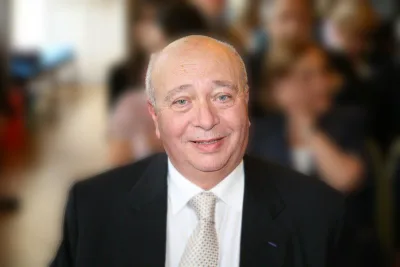
Claude Nataf
Founding President
Biography
Top of his class at the Institut d’études politiques de Paris (1967), postgraduate diploma (DEA) in twentieth-century history from the Fondation nationale des sciences politiques, vice-president of the Commission française des archives juives, founding president of the Society for the History of the Jews of Tunisia, departmental delegate of the French national education system
Image
Enregistrements audio
Ceremony of 8 December 2024 in memory of the round-up of the Jews of Tunisia
Download the MP3Ceremony of 8 December 2024 in memory of the round-up of the Jews of Tunisia
Download the MP3Photos
In the same series
9 December ceremony
Round table of 8 December 2024: ENLISTING, SURVIVING AND RESISTING – THE JEWS OF TUNISIA IN TIMES OF PERIL
9 December ceremony
Ceremony in memory of the round-up of the Jews of Tunisia
9 December ceremony